Showing posts with label Travel Food. Show all posts

Monday, August 20, 2012

Zanzibari Pesto


Potato Fritters with Chili Sauce
We followed the Masai guard into a warmly lit dining room where two doors opened out to the star studded sky.  Just past the sandy porch, waves crashed with the strength of full tide.  We had survived a puddle jumper flight from the Tanzanian bush and landed, it seemed, in paradise.

Fabio, the charismatic owner of Mamamapambo Hotel, ushered John and me up a spiral staircase to a lofted room.  We almost didn’t need a to turn on the lights, the full moon shone bright enough to illuminate the comfortable Zanzibar lounge chairs and plush cushions strewn about the veranda. 


Women Collecting Seaweed
He gave his profuse apologies.  With our plane arriving late that evening there would be no time for his cooks to make a complicated dinner.  But perhaps something simple?  Maybe a mango salad?  Or a plate of pasta?  A pesto or arrabiata could be arranged.

Really?  Pesto and arrabiata in Zanzibar?  That would be easy for his cooks to do, just like that?  We could hardly pass up the offer.

Fifteen minutes later we descended back into the cozy dining room.  One plate of pesto spaghetti made with fresh basil (and did I detect peanuts?) and one spicy penne arrabiata materialized, perfectly al dente. It was as good as if we were in Italy.  Except we were far from Italy, hungrily bent over plates, adrift on a tropical island off the coast of Africa. 


Fisherman on his boat
The next morning I spent a couple of hours watching village life happen below our veranda.  Women waded out into the turquoise waters early in the morning not returning until late in the afternoon, trailing wooden dhows leaden with bulging potato sacks.  These sacks carried the women’s livelihood: seaweed to be dried and shipped to Japan where it would find its way into cosmetics and creams.  Their daughters and sons attempted to help with the load, but even young boys working together could not equal the strength of a mother’s arms as she hoisted a bag on her scarf wrapped head and carried it the long walk in. 

Meanwhile, the few men who appeared to be working, gathered food.  Fishing dhows shipped out for the reef early in the morning returning with their catch and the rising tide.  Boys with sharp sticks drove octopus from their holes and collected them in canvas sacks.  Sea urchins and cockles filled buckets, destined for the market or the feast that would happen after the sun went down for these Muslim villagers celebrating the holy month of Ramadan. 

Mediterranean Tuna
We easily fell into a routine.  Lunch was always pasta giving us a chance to try as many variations as we could. Puttanesca, tuna with mint and lime, fresh crab, then back again to that pesto and arrabiata.  Each (with the exception of slightly gummy crab) was executed with perfection.  Fabio informed us that the produce was grown locally but for certain items like the Spanish olive oil and the Italian dried pasta, they relied on an importer.  His wife, Stephania, had lured the men in the kitchen from up the coast at one of the bigger and splashier resorts catering to mostly Italian tourists.  They already had the basics of Italian cuisine that she built upon, teaching the cooks her own recipes.  These Zanzibari men made pesto better than most Italians I know.
Coconut Crusted Kingfish

In the morning while we nibbled on fresh baked pastries and papaya, Stephania would post the night’s specials on a small black board.  If the fishermen brought in tuna that morning there might be “Mediterranean Fish” listed- grilled and topped with compote of tomato, olives, and garlic.  Kingfish, a local catch, made a couple of appearances, once expertly breaded in a crust of fresh coconut.  Appetizers ranged from a lime drenched mango salad to creamy pumpkin soup to fluffy balls of fried potato puree that would not have been out of place on any New York menu. Samosas stuffed with fish, fresh chapatis, hot sesame studded rolls with every meal, there was little these chefs couldn't cook. 

Before we knew it the three nights were up.  We were tan, relaxed, well-fed and ready to trade in our adult lives for this beach idyll.  We told Fabio and Stephania if they ever needed help, we’d gladly come work for them. 

Work for them?  Nooo… Fabio said.   But if you are really interested, I might have a hotel to sell you, he said with his characteristic wink.

It seemed that the women gathering seaweed weren’t the only ones breaking their backs.  Making pesto in Africa was hard work.  Albeit, Fabio and Stephania’s kind of hard work came with an amazing view and some delicious perks.  

Amy Powell is a food and travel writer based in New York City. She is a graduate of Cornell University's School of Hotel Administration and the French Culinary Institute. Follow her on Twitter @amymariepowell

Thursday, February 9, 2012

Taste the Trip: Edible Souvenirs


Cambodian Pepper Green Curry

If you are going on a trip soon and want to bring me back a souvenir, I’ll give you a tip: when it comes to gifts, I’m cheap and I’m easy.  Just ask my boyfriend.

When John went on a work trip to Cambodia last fall just before my birthday, he returned with presents in tow.  I adored the scarf of eggshell blue silk and instantly wrapped myself up in the buttery soft pashmina of ivy and black.  But he saved the best for last: three little jars of spices- white peppercorns, green peppercorns, and red chili powder.

These Kampuchean peppers had the ability to clear sinuses with just one little sniff.  I had never been so keenly aware of the difference in smell between peppercorns until they were brought back for me direct from the source.

Over the next month we found ways to work the peppers into meals in ways both big and small.  The black pepper was coarsely ground and crusted on a flank steak.  Both peppercorns were sprinkled on salads and tossed with potatoes before roasting.  Black, white, and the red chili powder made its way into a spicy green beef curry.  Each time we cooked, we inhaled the aromas of the Southeast Asian jungle.  With each bite, we were transported far, far away from our city apartment. 

Spices are also one of my favorite souvenirs for myself.  Light and portable, they are easy to pack and simple to carry, an important factor to consider particularly if they are purchased at the beginning of a long journey.

They are the gift that keeps on giving, a literal taste of vacation long after a return home.  A bag of red salt from Hawaii, Kaffir lime leaves from Thailand, a large salt crystal from Namibia’s Skeleton Coast, and most recently, vanilla beans and nutmeg were carried all the way home from a spice farm in Bali. 

Friends will often think of edible gifts for me when returning from exotic trips. Some years ago a friend traveled to Syria and returned with a package of saffron.  It was a rare and beautiful gift from a country now plagued with violence.  I have never been to Syria but I thought of the country often as I bloomed the red threads to season paella and stirred the stigmas into broth adding vibrant color and flavor to bouillabaisse.

When it comes to gifts from travels, it is good to remember that clothing fades, jewelry breaks, and one only has so much room for African drums.  Memories may last forever, but spices, now that is a gift so good you can literally taste it.

Amy Powell is a food and travel writer based in New York City. She is a graduate of Cornell University's School of Hotel Administration and the French Culinary Institute. Follow her on Twitter @amymariepowell

Friday, January 27, 2012

The New Go-To Condiment: Sambal Matah


Ingredients for Sambal Matah
Ketchup was so eighties.  Salsa so nineties.  Sriracha so aughts.  Just when I thought there could not possibly be a new go-to condiment worthy of this decade, sambal matah- an addictive mixture of fresh shallots and chilies- entered my life.  This vibrant side-dish-meets-chili-sauce is so vibrant, aromatic, and versatile I want to eat it with everything from scrambled eggs to steak.  Really, I would eat it with about everything but chocolate cake.

The good news is whipping up this potent dish at home takes little more than some elbow grease for chopping and a bit of market sleuthing to find a couple of less common ingredients. 

Sambal, broadly defined, is any chili based condiment coming out of Indonesia, Malaysia, Sri Lanka, and Southern India.  These sauces and salads range from cooked to raw and might include garlic, coconut, palm sugar, ginger, tamarind, and kaffir lime, among other common regional ingredients. 

Sambal Matah Marinating
Throughout the island of Bali several forms of sambal prevail.  At Kafe Batan Waru in Ubud, a plate of three sambals is brought to the table on request, the level of hotness defined by three different sized slices of lime.  But among the mélanges of chilies, garlic, and spices I ate throughout that island, the one I kept asking for again and again was the strikingly different sambal matah.

Sambal matah is a sort of raw onion salad made of thinly sliced shallots, garlic, bird’s eye chilies, lemongrass, shrimp paste, sugar, salt, and kaffir lime.  When the flavors of this spicy salad mix and mingle the result is a harmonious, gripping burst of Southeast Asian flavors.  In Bali I ate this by the heaping spoon full alongside grilled turmeric chicken, fried tilapia, crispy duck, and banana leaf steamed fish.  I wouldn’t think to stop piling on the sambal until my lips had gone numb from the tingling spice. 

Grilled Tuna with Sambal Matah
Making this at home I made two important substitutions.  One: Balinese shrimp paste was going to be hard to find but I could still get the same umami affect from a hearty splash of Vietnamese fish sauce.  Two: fresh kaffir lime leaves (which every recipe I found called for) are also pretty difficult to source.  I bring dried kaffir lime slices and leaves back with me from South East Asia whenever I’m there.  They last forever and only need a little hydration from hot water and they are ready to go.  I found several sites available for shippingin the United States offering dried kaffir lime leaves at reasonable prices

Everything else- a pile of shallots, garlic, lemongrass, fish sauce, sugar, lime juice, salt- is all easy to find in most markets.  A little chop, chop, chop, some gentle mixing, and quick sit to let the flavors meld together and this condiment is ready to go. 
Beyond Asian food samal matah could pair well with smoked salmon, grilled sausages, or even a simple summer tomato salad.  Bye bye, ketchup.  Adios, salsa.  See ya, sriracha.  My new slather-on-everything condiment, sambal matah, is here to stay. 

Sambal Matah
Time: 30 minutes

5 slices dried Kaffir lime or 2 dehydrated leaves
8 shallots
3 cloves garlic
4-8 Bird’s eye chilies, depending on desired hotness
2 lemongrass stalks
1 ½ tsp. Vietnamese fish sauce
1 ½ limes
1 tsp. palm sugar, raw sugar, or brown sugar
½ tsp. Kosher salt
¼ cup vegetable oil

Pour hot water over Kaffir limes or leave and let sit for 10 minutes to rehydrate. 
Peel shallots and thinly slice crosswise.  Peel garlic and finely chop.  Discard stems on chilies and finely mince. Using the blunt edge of a chef’s knife, whack the lemongrass along the length of the stalk to bruise.  Remove tough outer layer.  Thinly slice white part of the lemongrass.  Finely mince the slices.  Into a large bowl mixt shallots, garlic, chilies, and lemongrass along with fish sauce, the juice of 1.5 limes, sugar, and salt. If using dried kaffir lime leaves, remove the woody spine then finely mince remaining leaves and add to the bowl.  If using dried slices, finely mince the whole slice and add to the bowl.  Stir in vegetable oil and gently mix the shallots with the rest of the ingredients so everything is well coated and evenly distributed.  Let the mixture sit for at least a half hour before using.  Store in an airtight container in the refrigerator for up to a week.


Amy Powell is a food and travel writer based in New York City. She is a graduate of Cornell University's School of Hotel Administration and the French Culinary Institute. Follow her on Twitter @amymariepowell

Friday, January 20, 2012

Fishing for Truth in Balinese Cuisine


Tilapia from Lake Batur, Bali

 Prior to a big trip, you can usually find me curled up in a chair intensely studying a guidebook on my destination.  I like to know what I’m getting into.  Seemingly unimportant things, for instance that the population of Namibia is 80% devoutly Christian, can prove useful at some point, say when a corrupt cop is trying to trap you into paying a bribe for a made up traffic violation and you appeal to his Christian sense of forgiveness when assuring him that you “are only human, God knows we make mistakes and we can only ask to be forgiven.”[1]  When the factoids help get me out of trouble, I’m glad I studied up.

This past trip to Bali I did some guidebook reading, to understand the layout of the island and also how the culture there would differ from Java, where we had been last summer. I was surprised to read a line on cuisine asserting that fishing is not a traditional part of Balinese culture and thus fish not a part of the local diet.  Historically, this text claimed, Balinese have viewed the ocean as unclean and have preferred land animals, like duck and pig, to the gifts of the sea.  If this were true, it would be the first island I’ve been to where an abundant source of food available right out a people’s door is not used.

It was true we did not see many fishing boats during our two weeks, save for a few mid sized vessels off the coast of Candidasa, but we ate fish nearly everyday.  Given that the fish was listed as local, someone was fishing.  Mackerel in curry, local tuna cooked in banana leaf, and mixed seafood satay; when it came to eating, fish was everywhere.

Young Fishermen in Pekutatan
It would be possible to conclude that demand for fish has evolved from tourists, the source of 80% of Bali’s economy.  But a trip to Lake Batur had me questioning that assumption.  The lake rests at the eastern slope of Mt. Batur, Bali’s only still active volcano.  Three hundred feet deep at the center, the lake was formed from the collapse of what was once a much larger mountain.  Now the lake and rich volcanic earth feed an active agriculture business in the caldera.  The lake also supports tilapia, a thriving business for some locals, including our hiking guide who supplements his guide income with a small fish farm. For two meals during that visit we dined on "lakefish", tilapia deep fried and smothered in Balinese sambal.

Wrapping up our trip on the west coast of the island, we stayed near a small town, Pekutatan, a Balinese fishing village.  At sunset on this deserted strip of black sand beach it appeared that fishing was exclusively traditional.  No boats patrolled the coastline just solo fisherman untangling nets in the setting sun and fathers with fishing poles, thigh deep in the tide side by side with their sons. At dusk the small boys were sent in with the days’ catch, a dozen fish for each set of small hands, and I imagined a mother waiting at home to cook up a fresh fish dinner.   
Guidebooks can be invaluable for basic information, but hotel listings change, restaurants come and go, and sometimes the local people change too.  There may have been a time where fishing was not a part of Bali’s culture or economy, but it is now.  And judging by the tasty results, that’s one guidebook claim I was happy proved wrong.

Amy Powell is a food and travel writer based in New York City. She is a graduate of Cornell University's School of Hotel Administration and the French Culinary Institute. Follow her on Twitter @amymariepowell

[1] This actually happened less than one hour into our two-week road trip in Namibia.  John’s expert use of that factoid got our “fine” reduced to US$20.

Tuesday, January 17, 2012

Beyond the Book: Ubud, Bali


Spanish Mackerel with Yellow Curry and Fern Tips at Batan Waru

 I had heard many great things about Ubud, the artistic heart of Bali.  And then I saw one thing that scared me: a very long trailer of Julia Roberts biking through unnaturally green terraced rice paddies as the lead character in Eat, Pray, Love.  A popular book plus a Julia Roberts movie could only spell the eminent demise of anything vaguely authentic about a place. I could only hope I made it in time, before the city was entirely consumed by tourists.

John had been raving about Ubud as he had visited on several occasions, pre-blockbuster movie.  We settled into a villa at Pertiwi Resort, a charming hotel in the heart of town.  Walking to dinner that first night, we batted off several children and a few sad looking women begging for handouts.  John insisted it had never been like that, in the years he had been coming to Ubud he had never seen beggars.  This was not a good sign. 

But as our days continued, there was little else about which to complain.  Aside from the hoards of day-trippers coming to scoop up bargain souvenirs at the labyrinthine central market and feed the residents of the Monkey Forest, there was much to love about this town.  To begin with, we were able to load up on good wine for the duration of our trip at an excellent little store appropriately called “Wine Shop”.  (It is visible as you drive North into Ubud on Jalan Pengosekan about 200 meters before the sharp left onto Monkey Forest Road.)  There we found a decent collection of Australian wines, some costly French Bordeaux, and the lowest prices on liquor in the city.

Slow Roasted Goat at Ary's Warung
The best surprises came at dinner where beyond the Aussie bars with Dave Matthews cover bands, we discovered there is sophisticated dining to be had.  Ary’s Warung is the sort of restaurant that sticks out like a pair of Manolo Blahnik strappy sandals in a closet full of flip flops- it is just too sophisticated looking for its surroundings.  Maybe that’s why no one was there except for two or three tables the occasions we dined at Ary’s.  Too bad for everyone else, because the food is mostly exceptional.  Slow roasted goat in Indian spices, steamed duck Balinese style, beef cheeks Rendang- these are the sort of dishes that would cost a fortune at a trendy restaurant in the West, but here, no entrée was more than $15.

Noodles with Five Spice Chicken at Lamak
Another favorite, and equally empty restaurant: Lamak on Monkey Forest Road.  You can hardly tell Lamak exists from the street, but inside the room opens up to reveal two floors of spacious, comfortable tables with open walls looking out onto the surrounding foliage.  The female chef is doing refined versions of Indonesian food like Mie Goreng with five-spice chicken at lunch and a dinner menu that spans the globe for inspiration.  Our best dishes included a smoked tea infused duck broth with duck tortellini and a coconut laced opaka ceviche to start, and a plate of butterfish medallions surrounded by a riot of flavors from crispy lentil patties to sweet tomato chutney. 

Pepes Ikan, Fish in Banana Leaf, at Batan Waru
For more everyday eating we frequented the busy Kafe Batan Waru.  Indonesian and Balinese classics are clearly crowd pleasers and they do them well.  Extra sambal is necessary as they dumb down the spice a bit, no doubt to suit most Western palettes. But on request, the staff kindly brings out a plate of sambals with three levels of hotness from which to choose.  Some of my favorite dishes here were specials, like the Spanish Mackerel in Yellow Curry Sauce with fern tips.  A bit much for lunch but somehow I found room. 

Oh yes, and for the art lovers there’s plenty of that in the galleries scattered around town.  For traditional dance and music there is at least one show a night going on somewhere.  And for those who are chasing a more holistic than hedonist experience, there are more than enough organic cafes and yoga clothing stores for that set too.  For people who like to straddle the worlds of indulgent eating and healthy living like my boyfriend and I, there’s daily yoga classes at Taksu Spa open to all levels and even a decent gym, Ubud Fitness Club, where for $5 you can cram in some reps before heading back to Batan Waru for a lunch of fish steamed in banana leaf and a watermelon juice. 

There may now be occasional beggars, and I’m sure that many yoga shops did not exist five years ago, but Ubud is a surprisingly charming place with a level of sophistication mixed with tradition that should appeal to many kinds of people.  It certainly appealed to us- we liked it so much the first time we came back again a week later. 

Amy Powell is a food and travel writer based in New York City. She is a graduate of Cornell University's School of Hotel Administration and the French Culinary Institute. Follow her on Twitter @amymariepowell

Thursday, January 12, 2012

A "Passion" For Balinese Fruit


Passion Fruit 

It is fruit season in Indonesia.  Or at least that is what the hotel employees tell us as we bat flies away left and right while trying to have a quiet lunch outdoors.  The flies may bother me, but it is a small price to pay for eating Bali’s wealth of tropical fruits in their peak season.


I have always gorged on papaya when traveling in South East Asia but this trip I have been drawn to even more exotic fruit.  Spikey, gooey, pulpy, I can’t get enough of the abundance of weird tropical fruits in this part of the world.

Driving through central Bali, it is hard not to notice the abundance of the region.  Lining the roads through the vibrant green terraced rice paddies, fruit trees hang heavy with durian the size of dinosaur eggs while bamboo big enough to be a giant’s straw stands at attention.

In a place this enchanting, it is no wonder some of my favorite fruits are the strangest looking.  The custardy filling of a durian with the stink of gorgonzola is not one of my favorites.  But for every durian that are even more baby bananas, mangosteen, passion fruit, and rambutan.

Rambutan when removed of its husk is often mistaken for the more common lychee. Both have milky sweet fruit flesh surrounding a hard brown pit.  But it is the skin of the rambutan that makes it special.  Brilliant red and covered in soft, hairy spikes, it looks not of this world.

Passion fruit, my latest obsession, is quite the opposite of rambutan in looks.  From the outside, it appears not so much different than a smooth, unripe orange.  The skin, though hard, is quite thin.  Once pierced with a butter knife, or thumbnail, the shell easily gives way.  But I tear gently in two so as not to disturb the prize inside.

Beneath the shell is a treasure of gooey pale yellow translucent fruit bundled together against the foam interior walls.  Inside each pea sized pod is suspended a miniature brown seed, crunchy and edible.  These little blobs then attach to each other, a mass of alien eyes. 

I spoon out the pulp or, if I’m feeling particularly greedy, I gently prod the seeds to release them from the skin, tilt my head back, and let the fruit slide right into my watering mouth.  Sweet, tart, crunchy, silky- passion fruit seeds are a taste experience quite unlike any other.

Passion fruit are becoming easier to find in the US at stores that stock a special section for exotic produce.  When I’m not in a tropical climate, it is nice to give the fruit a little more attention worthy of its overseas journey than a simple “cut and slurp”. 

At a hotel I was recently given a dish of sorbet, topped with passion fruit seeds and ginger beer served in a martini glass.  At home this would be a simple, unusual dessert for a dinner party- store bought sorbet in lemon or orange, half a passion fruit per person, and some good ginger beer.  A cannot imagine a more elegant presentation to show off those delectable little seeds. Then again, classy or not, eating them straight from the shell is pretty delicious too.

Passion Fruit Ginger Beer “Martini”
Serves: 6

1 pint lemon sorbet
3 passion fruit
1 ½ cup ginger beer
Mint leaves for garnish

Place a scoop of sorbet in each of six chilled martini glasses.  Remove the seeds from the passion fruit.  Divide up among glasses on top of the sorbet.  Top each glass with a couple of ounces of ginger beer each.  Garnish with mint leaves.  Serve immediately. 

Amy Powell is a food and travel writer based in New York City. She is a graduate of Cornell University's School of Hotel Administration and the French Culinary Institute. Follow her on Twitter @amymariepowell

Monday, January 9, 2012

Better Bebek: A Taste of Balinese Duck


Bebek Pelalah at Bebek Bengil, Nusa Dua

 Ever since I first learned to cook the perfect seared duck breast at cooking school, I’ve been hooked.  Skin scored in a cross hatch, cooked low and slow until the fat renders, the skin dark caramel and crisp, and the breast the dusty rose of medium rare.  Sliced thin on a diagonal with little more than maybe a slick of jus or vinegar spiked gastrique, it is a hard dish to improve upon. 


At least, it seemed hard to improve upon until I tasted my first Balinese duck.

In the last nine days in Bali I have eaten duck at no fewer than five meals, each occasion no less interesting and often more delicious than the last. 

It helps to start with an excellent product.  Balinese duck, or bebek, is smaller than what we are used to finding in the West with a noticeably lower fat layer- presumably ducks don’t need so much insulation in tropical climes- and an intensely meaty flavor that is rich without tasting gamey.

The restaurant turning out one of the best examples of this local specialty and winner for most creative restaurant name: Bebek Bengil.  The translation, Dirty Duck, has no relation to the sanitation at the restaurant that, at the Nusa Dua location, was a bright, airy pavilion with comfortable low tables and piles of cushions-  ideal for eating cross-legged on the floor while watching the surf. 

Bebek "Betutu" at Ary's Warung, Ubud
Bebek Bengil deep fries its ducks, sold by the half, and serves them with an array of spicy sambal and rice.  But it was the Bebek Pelalah that blew me away on a later visit.  Fried like its plain counterpart, this half duck comes artfully displayed, breast and wing stacked up against the leg portion, and covered in a traditional Balinese sauce of stewed tomatoes, chilies, and spices.  It has all the textural appeal of the plain fried duck with a deep and nuanced sauce so addictive I continued to lick the bones long after the last shreds of duck meat had disappeared.   

Fried is not the only technique the Balinese employ in preparing duck.  At Ary’s Warung in Ubud, duck leg and breast had been long simmered in a broth redolent of the local spices- nutmeg, cloves, chilies, black pepper- in an homage to the island’s famous whole steamed duck betutu.  The textural affect was the opposite of the fried duck- all the flavor of the other in the meat but so tender it melted on the tongue. 

The strange thing I realize now, that for all the duck I’ve eaten this trip, I have yet to see one running wild.  Perhaps the heavy rains of the past week have kept them away from the terraced rice paddies where I’m told they like to hang out. Wherever they are, I am sure they’re enjoying the idyllic free-range life because who, man or beast, could not live well in paradise?  And judging by the consistently tasty results, these Balinese ducks have a very good, very delicious life, all the way to the end.

Amy Powell is a food and travel writer based in New York City. She is a graduate of Cornell University's School of Hotel Administration and the French Culinary Institute. Follow her on Twitter @amymariepowell

Thursday, December 15, 2011

LA Weekend: No Car, Never Better


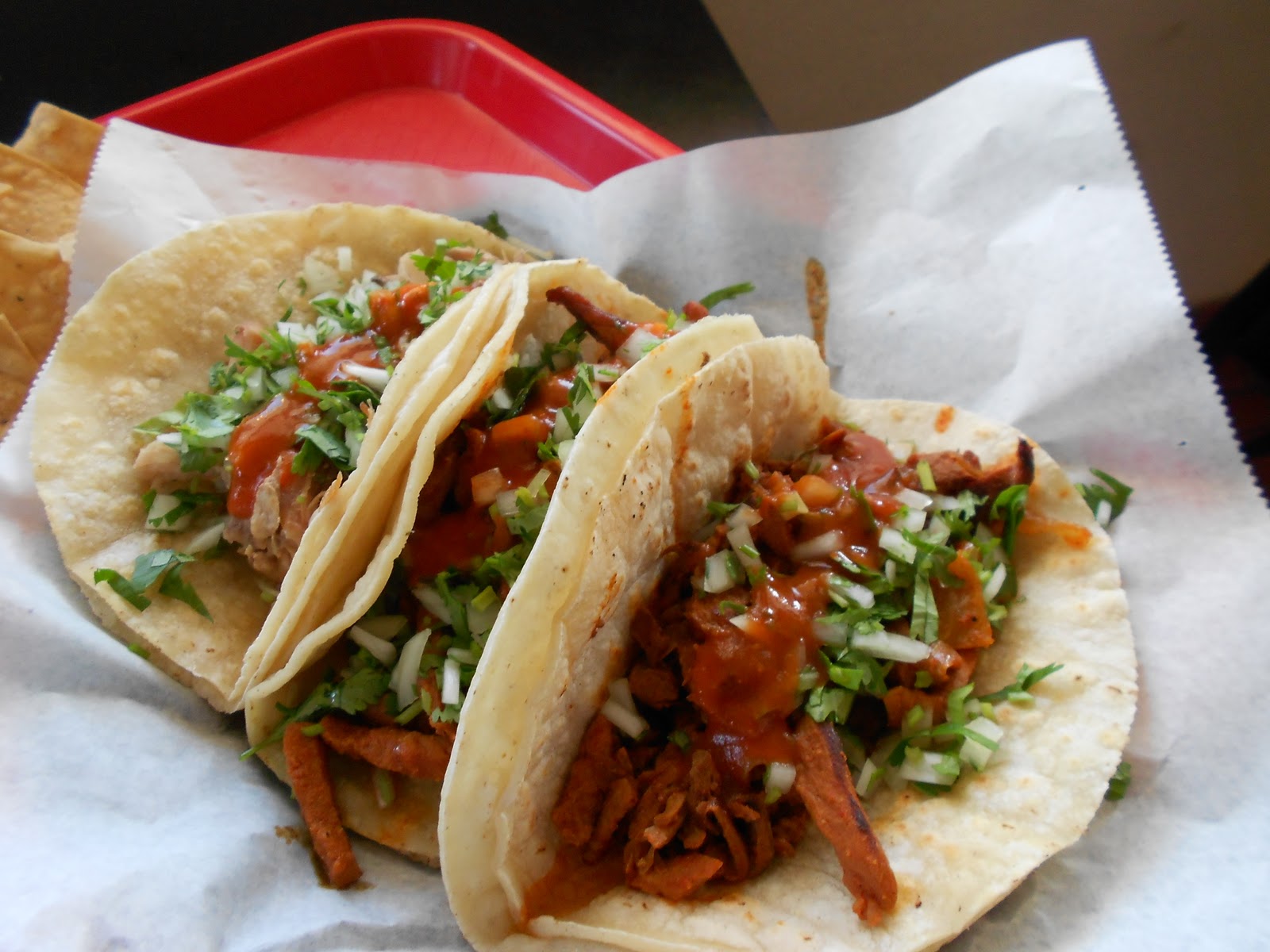
Tacos al pastor at Los Campos Tacos
Picture this: Los Angeles with no traffic.  No driving up and down crowded streets looking for parking.  No passing on that third glass of wine in anticipation of a long drive home. Impossible, you say?  Sure it is possible.  All you have to do it leave the car behind.

Is it easy to travel around California’s most infamously traffic-clogged spread out city without the use of a car?  Yes and no.  It really depends on where you are staying and what you want to do.

It was in that spirit a couple of weeks ago John and I spent a long weekend in Venice Beach and purposefully decided to do without a car.  We were looking for a beach hotel with proximity to long, ocean runs.   We needed access to great food and some cool bars.  And everything needed to be no more than an easy walk, bike ride, or taxi away.  

Here’s how we did it.

FRIDAY

Pork Cheeks at La Cachette Bistro
Afternoon: Arrived at the Hotel Erwin in time to watch the sun go down from our ocean view room.   Located one block from Venice’s famous boardwalk, music wafted up from the street where someone seemed to be playing Jimmy Hendrix at any hour of the day to the beat of the drum circle out by the sand. 

Evening:  Our friends picked us up for a group dinner at the consistently delicious French bistro, La Cachette, three miles north in Santa Monica.  Pork cheeks, cassoulet, tuna tartar, frisée salad, even a vegan plate for one friend all served with the utmost graciousness from the staff.  They didn’t even seem to mind we closed down the place.

SATURDAY

Morning: Walked catty corner to the hotel for lattes, full leaf green tea, and New York Style bagels at Collage Cafe.

Afternoon: Ran up the paved boardwalk past Santa Monica pier and back.  Rewarded ourselves with tacos al pastor and jamaica at Los Campos Tacos next to the hotel- as good as any taco stand in LA. 

Tagliarini Nero with Calamari at Tasting Kitchen
Night: Walked up to Abbott Kinney, Venice’s main artery of hipster life.  Pre-dinner, The Otheroom was unusually empty.  Pulled up a stool for an AllagashWhite and a glass of French Sauvignon Blanc.  Up te street, we scored a table in the main dining room at Portland influenced TastingKitchen after only a twenty minute wait.  Feasted on gnocco fritto and burrata, escarole salad, tagliarini nero with squid, and buccatini amatriciana.  Caught a ride home with our dinner companion. 


SUNDAY

Seared albacore with yuzu at Wabi Sabi
Morning: Round two at Collage Café plus the New York Times from Beach Market by the Marina del Rey pier.  Sunday paper was totally worth the 1.5 mile round trip walk.

Afternoon: Rented bikes and pedaled up to The Huntley Hotel in Santa Monica for lunch.  The valet parked our bikes in a hidden back area.  No one seemed to mind our slightly sweaty bodies as we tucked into cappuccinos, flatbread pizzas, and towering turkey sandwiches while taking in the epic coastline view from Penthouse, the top floor restaurant.  Continued the bike ride until the sun went down.

Evening: Pretty chilly out so caught a cab ($7) to the far end of Abbott Kinney for a solid sushi dinner at Wabi-Sabi.  Sipped on gold-flecked Bunraku sake while munching on seared albacore sashimi with yuzu.

MONDAY

Morning: Round three of coffees, bagels, and New York Times.  Almost like we were in New York but with better weather and an ocean view.

Afternoon:  Round two of beach run plus tacos and hibiscus drink.  If it ain’t broke, don’t fix it. 

Fluke crudo at Gjelina
Evening: Met up with some old friends for beers at Larry’s,  a slick new beach bar around the corner from the hotel.  Perfectly empty in December, I could see how this joint with its massive tap beer list and airy rooms is probably packed during the summer season.  Caught a ride to Gjelina on Abbott Kinney.  Ignored their hour wait warning based on experience.  30 minutes and a glass of wine later our party settled into seats by a heater on the patio.  Cured meats, mushroom toast, caramelized Brussels sprouts, cheesy arugula pizza- the courses and the wine kept on coming.

TUESDAY

Pork and Fermented Bean Curd at Mao's Kitchen
We bid farewell to Venice by shaking it up- our run was followed by lunch at the appropriately Venice-cool Chinese restaurant Mao’s Kitchen, conveniently located next to the coffee shop and across the street from the taco stand.  Dumplings and stir-fried pork with fermented bean curd hit the spot. 

We walked, we ran, we biked, and occasionally caught a ride.  Happy well-fed bellies, plenty of sunshine and open water, LA was at its best and the car was never missed. 


Amy Powell is a food and travel writer based in New York City. She is a graduate of Cornell University's School of Hotel Administration and the French Culinary Institute. Follow her on Twitter @amymariepowell

Saturday, December 3, 2011

Welcome to Virtual First Class


Prepping Pasta for Next Day's Virtual First Class Meal

If you were sitting next to me in the Economy section of Virgin America flight from JFK to LAX yesterday, it’s okay if you were jealous.  I was flying Virtual First Class while you, my seatmates, were eating stinky French Onion Sunchips. Play your cards right and I’ll let you in on the secret to my supremely comfortable and delicious flight.

For the average peon of travel, economy flights are really the only option, particularly when flying domestically.  But cross-country flights can be a real drag.  At upwards of six hours of flight time not including time traveling to and from the airport and time you need to get there early for check-in, there is simply no way to avoid eating something at some point during the journey.  And as anyone who has ever stood in front of the dismal options of an airport food court or perused the Snack Box menu onboard knows, this meal is likely to be at best filling and will almost certainly leave you depressed at the notion that you actually spent money to eat that way.

Enter Virtual First Class.  I cannot take credit for this title.  A friend of my boyfriend’s coined it for her practice of packing a gourmet picnic lunch to take on board long haul flights where she was flying Economy.  The day before her ordeal, she would stop by the deli and load up on nice salami, cheese, and good crackers.  She would pack linen, some silverware, and even a half bottle of wine in the pre-9/11 days.  Avoiding the grease of a pre-flight meal and the tasteless options inflight, this clever traveler passed her airtime in relative comfort with food that might even have been a notch above that being served at the front of the plane.

I have taken to adapting this strategy for my own.  If it is going to be an especially long travel day I might even go so far as to pack breakfast, lunch, and a snack.  Liquids of course are limited (bye bye to BYO wine days) and refrigeration is not possible, but other than that just about anything goes. 

While my flying companions subsisted on their airport snacks, I brought out one meal after the next during the six-hour flight.  Wrapped tightly in my new birthday pashmina to ward off the plane chill (who needs those scratchy first class blankets anyway?), I nibbled on a breakfast of homemade banana-walnut bread while sipping my favorite green tea from a travel mug and reading the paper.  A few hours later, as lunch pangs set in, I pulled a thin plastic food container from my bag.  Pasta of small shells, chicken apple sausage, lemon, and parsley tasted just as good at room temperature as it had hot off the stove for dinner the night before.  A couple of foil wrapped dark chocolate pieces satiated my sweet tooth.  I was so pleased with my resourcefulness and the tastiness of my Virtual First Class meal, I splurged and purchased a $7 IPA from a San Francisco microbrewery to wash it all down. 

To my seatmates from Virgin America and all others facing cross-country trips this season, no need to pay to fly up front, fly the Virtual First Class way.  Bring some delicious food from home, a nice warm wrap, and good headphones to drown out the talking heads around you and you might just be surprised how a little good food can go a long way to making a six hour flight comfortable. 

Amy Powell is a food and travel writer based in New York City. She is a graduate of Cornell University's School of Hotel Administration and the French Culinary Institute. Follow her on Twitter @amymariepowell

Friday, July 29, 2011

The Sixth Food Group of Travel


I have a confession. Pringles, is my overseas secret lover. Yes, it is true. Home in the States I spurn the brightly colored cylinders of potato snack chips refusing to so much as recognize their existence on my way down the store aisle to other, healthier foods. But as soon as the wheels touch down in a developing nation I greedily wrap my hands around this strange and familiar processed food, popping off the lid, peeling back the seal, and digging my hand down for a taste of something deliciously familiar.


Confession Number Two: my overseas lust for junk food is not limited to Pringles. On a hot and dusty road in Africa a green glass bottled Sprite quenches my thirst like no bottle of water can. And a package of wafer cookies with cream in the middle might be the finest dessert I have for weeks. American cheese, well lets just say in desperate times- such as after an overnight bus on treacherous roads in Vietnam- a fried egg with bread and a piece of processed cheese can taste downright luxurious.


This lust for Pringles and its junk food cohorts is often driven by hunger- a late night in a cheap guesthouse with a growling belly or a stop for a pee at a remote gas station and often the only food recognizable and surely safe is this familiar canister in Sour Cream and Onion. But it is more than desperation- at some points I actually seek out these foods because they are a taste of familiar in strange lands and I like them.


As of today, four weeks into an Asia and Africa summer tour, here is a short list of foods I never ever eat at home that here I have eagerly and happily taken down:


Pringles


Oreos


Sprite


American Cheese


Happy Mix (a dry and overly salted Zambian version of Chex Mix)


Fried potatoes, in every form


I am a fickle lover. Come September and the end of the summer world tour I will say goodbye to Pringles and all his questionably nutritious friends. Don’t call, don’t write, I’ll say. But if those brightly colored packages bursting with salt and sugar could wink I think they would, knowing that I’ll be back. I can only stay away from the call of travel, and Pringles, for so long.