 |
| Leftover Beef Stew, Even Better on Day Three |
This was a very winey week.
So much so in fact, at one point I realized there were four bottles of
partially consumed red sitting around the kitchen that we probably weren’t
going to finish drinking. There was
nothing wrong with them per se, not corked or oxidized, we were just done with
them. Palates bored with one we were
ready to move on to something new.
I have a few solutions when I find myself in this
situation.
1.
Dump the bits down the drain.
2.
Push the wines on unsuspecting guests while you
open up a newer, more desirable bottle for yourself.
3.
Cook with it.
I don’t like waste and my friends are savvy enough to figure
out if I was pushing off mediocre, several day old wines on them so Option 3 it
was. Lucky for me, these long winter
months are just the sort of days that beg for meats braised in red wine. I dusted off my Julia Child tome, Mastering the Art of French Cooking, and
got to work on beef bourguignon.
Anyone who has watched Julia Child’s classic PBS cooking
shows knows the queen of American French food was anything but fussy. But when it comes to beef bourguignon, I’m
even a little less precious than her.
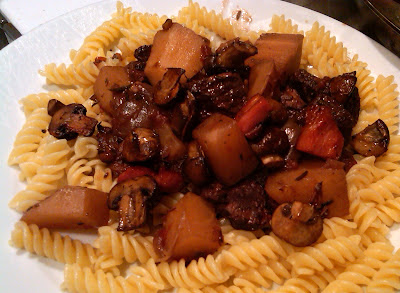 |
| Beef Stew- Day One |
Rather than going through the business of draining off the
cooking liquid, discarding the aromatics- onion, celery, carrot, garlic- then
reducing the liquid by itself only to put the beef back in when it is thick and
viscous, I just keep it all together. After 2-3 hours of cooking, thinly sliced
onions have melted down to silken, sweet strands so no need to discard
that. The carrots and celery are a
matter of taste. I don’t mind the mushy
carrots but many people do. In that case
I just cut them large enough they are easy to pick out with tongs.
In fact, I so don’t
dislike veg in my beefy, winey, winter stew, I actually add more toward the end
of cooking. All the root vegetables that
don’t do much for me in normal cooking life- rutabagas, parsnips, kohlrabi- are
magically transformed in this dish to sweet, tender-crisp cubes that, if they
don’t add much color, make a nice flavor and textural contrast to the buttery
beef. When the beef is molten and the
newly added veg just cooked, I take off the lid on my Dutch oven, crank up the
heat for a few minutes, and let the liquid bubble down till it’s nice and
thick.
As an added bonus, dishes like this actually benefit from
time lounging around the refrigerator or freezer. So if I’m cooking for one or two, no need to
worry about waste, I just pack it up and store it for a snowy day.
If there is one extra Julia step worth taking, it’s the
addition of some nice, fat cubes of bacon, what the French call lardons.
I happened to have some bulk pancetta from the local Italian market
lying around and this worked just fine.
Browned at the beginning then saved to sprinkle over the finished stew
at the end, it was a touch worth the extra five minutes of effort.
As for all that wine, I did pretty good work. Three partial bottles made their way into the
pot where, as if they were touched by the fairy godmother of the kitchen, they
magically transformed- limp, discarded drinking wines became a glorious,
full-bodied sauce coating cubes of fork-tender beef, sweet root vegetables, and
salty pancetta. I think Julia would have
approved.
Not Quite Bourguignon-
Beef and Wine
Time: 2.5-3 hours
Yield: 4-6 servings
4 ounces thick cut bacon or bulk pancetta
2 lb. beef stew meat cut into 1-inch pieces
Salt
Pepper
1 large onion
1 large carrot
2 celery ribs
3 garlic cloves
2 bay leaves
2 sprigs thyme
1 T. chopped rosemary
1.5 T. flour
1 cup chopped tomatoes with their juices, canned
3 cups red wine
2 cups beef broth, water or chicken broth
2 medium parsnips
1 large or two small kohlrabi
2 T. butter
4 oz. cremini mushrooms
Parsley
Egg noodles
Butter
Cut bacon or pancetta in thick, 1 inch pieces. Heat a large Dutch oven on the stove over a
medium flame. Add bacon or pancetta and
let cook, rendering the fat for about 10 minutes until pieces are browned on
all sides and crisp. Remove bacon or
pancetta and let drain on paper towels.
Leave fat in the pan.
While bacon is cooking season beef cubes on all sides with
salt and pepper. Turn the heat up
slightly, and add half the beef to bacon drippings. Brown on all sides. Remove first batch of beef to a plate and
repeat with second batch (add additional oil if necessary).
While beef is browning, roughly slice the onion. Peel carrot and cut into several large
pieces. Cut celery into several large
pieces. When second batch of beef is
browned remove that to the plate along with the first batch. Reduce heat to medium. Add onions, carrots, and celery to the meat
drippings in the Dutch oven.
Peel and crush garlic.
Add garlic, bay leaf, thyme and rosemary to the vegetables. Sweat veggies for about five minutes total
until onion is softened. Add beef back
into the pot with the veg and sprinkle over the flour. Stir the mixture to coat the flour over
everything. Cook for just about two
minutes stirring frequently. This will
cook the flour taste out of the flour.
Add the wine and crank the heat to high.
Use a wooden spoon to scrape the bits off the bottom of the pan. Add the beef broth (or water or chicken
broth), the tomatoes, and a little extra salt and pepper. Bring the mixture to a boil then reduce the
heat to medium low. Put a lid on the pot
and let simmer for 2 hours, until the meat can be cut with a fork.
About 45 minutes before the meat is done, peel parsnips and
kohlrabi. Cut both into pieces about 1
inch by 1 inch. Add these to the pot
after the meat has been simmering for about 1. 5 hours.
Clean mushrooms and cut into halves or quarters. Heat butter in a large sauté pan over a
medium flame. Add mushrooms. Sauté until browned on both sides, adding a
bit of salt and pepper at the end. Toss
the reserved bacon in with the mushrooms and set pan aside.
When meat is soft and root vegetables are tender but not
overcooked, discard bay leaf and celery and carrot if desired. Remove the lid. If liquid is not reduced to a desired
thickness, turn the heat up to high and boil it down till thick. Adjust seasoning as desired with salt and
pepper. While stew is finishing, chop
parsley and cook egg noodles according to package directions. Toss cooked and drained noodles with a bit of
butter. Reheat mushrooms and bacon. To serve, spoon stew over noodles, garnish
with mushrooms, bacon, and chopped parsley.
Amy Powell is a food and travel
writer based in New York City. She is a graduate of Cornell University's
School of Hotel Administration and the French Culinary Institute.
Follow her on Twitter @amymariepowell


